
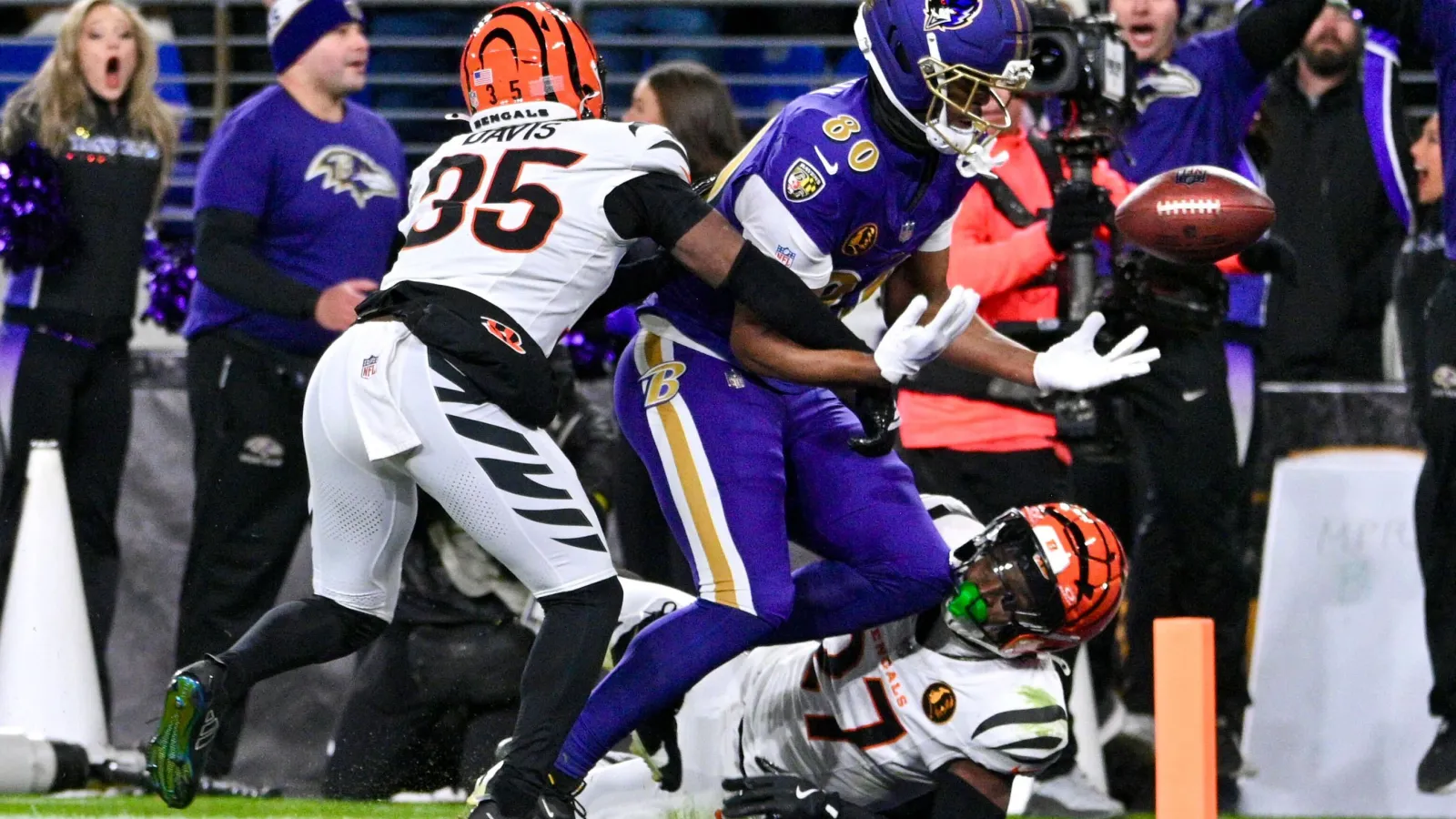
On November 27th, 2025, the Baltimore Ravens hosted the Cincinnati Bengals at M&T Bank Stadium on Thanksgiving Night in front of a national television audience on NBC. What was supposed to be a celebration of the Ravens’ remarkable turnaround from 1-5 to 6-5 instead became an embarrassing display of self-inflicted wounds and offensive futility. The game ended in a shocking 32-14 defeat for Baltimore, with five costly turnovers – three by Lamar Jackson – dooming any chance of extending their five-game winning streak.
The Bengals, entering at 3-8 with their playoff hopes on life support, welcomed back franchise quarterback Joe Burrow after a nine-game absence due to turf toe surgery. Despite not looking sharp statistically – completing just 24 of 46 passes for 261 yards – Burrow provided exactly what Cincinnati needed: leadership, composure, and two crucial second-half touchdown passes that put the game away. Ja’Marr Chase caught seven passes for 110 yards, and the Bengals’ defense, ranked dead last in the NFL entering the game, forced five turnovers and held Baltimore to just 329 total yards.
For the Ravens, the loss dropped them to 6-6 and out of the AFC North lead, falling a half-game behind Pittsburgh (6-5) in the division race. More concerning than the standings was the manner of defeat – Baltimore didn’t just lose, they self-destructed in spectacular fashion. Jackson committed three turnovers (two fumbles and an interception), tight end Isaiah Likely fumbled through the end zone on a would-be touchdown, and wide receiver Zay Flowers had the ball stripped late in the fourth quarter. Against the NFL’s worst defense statistically, the Ravens scored just two touchdowns and looked completely out of sync for much of the night.
The Thanksgiving disaster raised serious questions about whether Baltimore’s five-game winning streak was genuine improvement or merely the product of facing inferior competition. The answer, unfortunately, appeared to be the latter. When tested against even a mediocre opponent with a competent quarterback, the Ravens’ flaws – turnover issues, offensive line problems, Jackson’s declining mobility – were exposed ruthlessly on the biggest stage.
Before we go further, visit our Baltimore Ravens portal for discounted parking, hotels and Ravens events around the neighborhood. You have more discounted parking options with us for your next Ravens games!
The Order of Ravens Play
The game began promisingly for Baltimore, with Derrick Henry rumbling through Cincinnati’s porous run defense on the opening drive. Henry carried four times for 33 yards, including a 28-yard touchdown run that gave the Ravens an early 7-0 lead. On that scoring play, Henry also passed Hall of Famer Jim Brown on the all-time rushing list, moving into 11th place with his historical achievement. For a brief moment, it appeared the Ravens would feast on the league’s worst defense, just as the pregame analysis suggested.
But that optimism evaporated almost immediately. On Baltimore’s second possession, Lamar Jackson was sacked by Bengals defensive end Joseph Ossai, who stripped the ball at the Ravens’ 2-yard line. Cincinnati recovered the fumble in prime scoring position, but the Bengals couldn’t capitalize, turning the ball over on downs. It was a warning sign that Baltimore failed to heed – their turnover problems, which had plagued them during the 1-5 start, were resurfacing at the worst possible time.
The Bengals tied the game at 7-7 early in the second quarter when Evan McPherson connected on a 47-yard field goal following another Ravens miscue. Baltimore’s offense continued to struggle, unable to sustain drives or establish any rhythm. Jackson was missing open receivers, the offensive line was giving up pressure, and the play-calling seemed disjointed and predictable.
Then came the play that epitomized Baltimore’s Thanksgiving nightmare. Midway through the second quarter, Jackson found tight end Isaiah Likely on a deep crossing route, and Likely sprinted toward the end zone with nothing but grass ahead of him. He hurdled a defender at the five-yard line in spectacular fashion, appearing destined for a touchdown that would give Baltimore a 14-6 lead. But as Likely approached the goal line, Bengals safety Jordan Battle punched the ball out, and it rolled through the end zone for a touchback. Instead of scoring, the Ravens gave possession to Cincinnati, and the momentum completely shifted.
The Bengals capitalized immediately, marching 74 yards on 11 plays to retake the lead with another McPherson field goal. Cincinnati added a third field goal before halftime to take a 12-7 advantage into the locker room, and the boos from the M&T Bank Stadium crowd were audible as the Ravens trudged off the field. Baltimore had dominated time of possession in the first half and outgained Cincinnati in total yards, yet they trailed because of self-inflicted mistakes.
The third quarter offered a glimmer of hope for the Ravens. They received the opening kickoff and appeared ready to reassert control. But that hope was short-lived. On their first possession, Jackson lost his second fumble of the game – this time completely unforced. While trying to throw a pass, Jackson attempted to pull the ball back down and it simply slipped out of his hands. The fumble gave Cincinnati the ball near midfield, and the Bengals made Baltimore pay.
Burrow, who had looked rusty for much of the first half, suddenly found his rhythm. On third-and-9 from the Baltimore 14-yard line, he threw a perfect pass to tight end Tanner Hudson, who made a spectacular one-handed catch in the end zone while tightly covered by safety Kyle Hamilton. The touchdown gave Cincinnati a 19-7 lead and silenced what remained of the home crowd’s enthusiasm.
The Ravens finally showed some life on their next possession. Wide receiver Zay Flowers made the play of the night, pancaking a Bengals defender with a devastating block that sprung running back Keaton Mitchell for an 18-yard touchdown run. Mitchell scampered into the end zone untouched, and suddenly Baltimore trailed just 19-14 with most of the third quarter still to play. The deficit was manageable, the defense had been solid for most of the game, and there was still time to salvage the victory.
But the Ravens’ offense couldn’t get out of its own way. On the ensuing drive, they moved into Cincinnati territory and appeared poised to take the lead. Then, on third-and-9, Burrow found wide receiver Andrei Iosivas streaking down the seam, beating inside linebacker Roquan Smith for a 29-yard touchdown. The Ravens’ exotic pressure package – designed to rattle the rusty Burrow – failed to get home, and Iosivas walked into the end zone untouched. Just like that, Cincinnati’s lead was back to 26-14, and Baltimore’s momentum had evaporated.
The fourth quarter was a formality. The Ravens’ offense sputtered, managing just one first down on their next two possessions. Jackson’s deflected pass was intercepted by Bengals linebacker Demetrius Knight Jr., ending any hope of a comeback. McPherson added his fifth field goal of the night – a 52-yarder that pushed the lead to 29-14 – and Cincinnati was firmly in control.
Baltimore’s final indignity came with under four minutes remaining. Jackson drove the Ravens to midfield, but on fourth-and-8, his pass fell incomplete and the Bengals took over on downs. One play later, Flowers caught a pass but had the ball stripped by cornerback DJ Turner II, giving Cincinnati its fifth takeaway of the night. The fumble recovery allowed the Bengals to run out the clock, and the final score of 32-14 didn’t fully capture how thoroughly Baltimore had been dominated.
As the final seconds ticked away, fans streamed toward the exits, unable to watch any more of the carnage. The Ravens, who had celebrated climbing back to .500 just four days earlier, were now 6-6 and in second place in their division, their flaws exposed and their championship aspirations in serious jeopardy.
Game Heroes
Joe Burrow (Bengals): The storyline of the night belonged to Burrow, who returned from a Grade 3 turf toe injury that had sidelined him since Week 2. Wearing a carbon fiber plate in his left cleat to stabilize the surgically repaired toe, Burrow took off the protective footwear between series to put on more comfortable sneakers. The makeshift arrangement didn’t produce gaudy statistics – 24 of 46 passing for 261 yards isn’t going to win any awards – but it was more than enough against a Ravens team determined to beat itself. Burrow’s two second-half touchdown passes, both on third-and-9, were perfectly placed throws that showcased the timing and accuracy that had been missing from Cincinnati’s offense during his absence. “It’s a lot of fun to watch Joe Burrow play football,” said Bengals coach Zac Taylor afterward. “Statistically it’s not the best game that we’ve ever had as an offense, but you could feel the rhythm he was in, the confidence he was in.” Burrow himself acknowledged the rust, saying, “I thought second half, I started to put it more where I wanted.” For a quarterback 69 days removed from surgery, simply being on the field was an accomplishment. That he managed to outduel an MVP candidate and lead his team to victory on the road was remarkable.
Ja’Marr Chase (Bengals): The All-Pro wide receiver returned from his one-game suspension and immediately reestablished his connection with Burrow. Chase caught seven passes for 110 yards on 14 targets, consistently getting open against Baltimore’s secondary and providing the safety valve Burrow needed when protection broke down. Without Tee Higgins (concussion), Chase drew extra attention from the Ravens’ defense, yet he still found ways to create separation and move the chains. His presence forced Baltimore to play honest defensively, opening up opportunities for Hudson and Iosivas to make their touchdown catches. The Burrow-to-Chase connection, forged during their LSU championship run and refined over four pro seasons, was the one constant Cincinnati could rely on, and it delivered when needed most.
Evan McPherson (Bengals): The Bengals’ kicker had a perfect night, converting all five field goal attempts (including a 52-yarder) and both extra points. While Cincinnati’s offense struggled to punch the ball into the end zone – making just one trip despite six red zone opportunities – McPherson’s reliability kept points on the board and maintained the lead throughout. His 47-yard field goal in the first quarter tied the game at 7-7, and his subsequent kicks extended the advantage at crucial moments. In a game defined by mistakes, McPherson’s consistency was the antidote to Baltimore’s chaos.
Cincinnati’s Defense: The unit that entered Thanksgiving ranked dead last in the NFL, allowing 32.7 points per game and 415.8 total yards, produced its finest performance of the season. The Bengals forced five turnovers – matching their takeaway total from the previous five games combined – and held Baltimore’s vaunted running attack to minimal yardage after the opening drive. Joseph Ossai was the star, recording two sacks including the strip-sack of Jackson in the first quarter. Demetrius Knight Jr. intercepted Jackson in the fourth quarter to seal the victory. Jordan Battle forced the Likely fumble at the goal line. DJ Turner II stripped Flowers late to add insult to injury. This was a defense that had been embarrassed repeatedly all season, finally putting together a complete performance when their franchise quarterback needed them most.
Lamar Jackson: On the opposite end of the heroics spectrum stood Jackson, whose three-turnover performance was the defining factor in Baltimore’s loss. The two-time MVP completed just 17 of 32 passes for 246 yards with no touchdowns, one interception, and two fumbles. It marked his third consecutive game without throwing a touchdown pass – the first time in his career he’s gone three straight games without a passing score. Jackson’s accuracy was poor throughout, missing open receivers on multiple occasions and forcing throws into coverage. His two fumbles were particularly damaging – the first came on a sack deep in Ravens territory, the second was completely unforced as he tried to hold up on a throw. The mobility that had defined Jackson’s MVP seasons was largely absent, as he rushed just six times for 27 yards. His inability to escape pressure with his legs made him a sitting duck for Cincinnati’s pass rush, and the ankle and knee issues that had limited his practice time all week were painfully evident. “I can’t describe the level of frustration. I’m ticked off,” Jackson said afterward. “Turnovers are a big part of winning or losing games. Turning the ball over and giving them an extra possession pushes the outcome.”
Isaiah Likely: The tight end had his most productive game of the season statistically, catching five passes for a team-high 95 yards. But Likely’s performance will be remembered for one devastating mistake: the fumble through the end zone that wiped a touchdown off the board and gave possession to Cincinnati. Likely had made a spectacular 44-yard catch-and-run, hurdling a defender as he approached the goal line. But he failed to secure the ball, and Battle’s punch-out sent it rolling through the end zone for a touchback. Instead of Baltimore leading 14-6 and controlling the game’s momentum, the score remained 7-6 and Cincinnati took over with excellent field position. The Bengals marched down the field for a field goal on the ensuing drive, taking the lead for good. One play, one mistake, and the game’s entire complexion changed.
Derrick Henry: The veteran running back’s night had historic significance – his 28-yard touchdown run in the first quarter moved him past Jim Brown into 11th place on the NFL’s all-time rushing list. Henry now has 12,313 career rushing yards, with Tony Dorsett (12,739) next in his sights. But after that explosive opening drive where he gained 33 yards on four carries, Henry was bottled up completely, finishing with just 60 rushing yards total on 15 attempts. Cincinnati loaded the box, dared Jackson to beat them through the air, and the Ravens couldn’t adjust. Henry’s lack of production after the first quarter symbolized Baltimore’s offensive futility – when the easy yards dried up, they had no answers.
Zay Flowers: The third-year receiver had perhaps the best block of the entire season – a devastating pancake that sprung Mitchell for a touchdown – but also committed the game’s final turnover when Turner stripped the ball with under four minutes remaining. Flowers caught three passes for 50 yards and had a 36-yard touchdown reception wiped out by a questionable offensive pass interference penalty in the second quarter. His mix of brilliant and careless play epitomized the Ravens’ entire night.
What Worked and What Didn’t: In-depth Game Analysis
The Ravens’ offensive performance was inexcusable against the NFL’s worst defense. Cincinnati entered the game allowing 32.7 points per game, 415.8 total yards, converting opponents’ third downs at a 48.57% rate, and surrendering touchdowns on 65.31% of red zone trips. These were historically bad numbers, the kind that should result in offensive explosions for competent teams. Yet Baltimore scored just 14 points, converted a paltry percentage of third downs, and looked completely out of sync from start to finish.
The offensive line was dominated at the line of scrimmage. After allowing Henry to gash them for 33 yards on the opening drive, Cincinnati’s defensive front adjusted, loading the box and daring Jackson to beat them through the air. The Ravens couldn’t. The pass protection was inconsistent all night, with Jackson hurried and hit repeatedly. Ossai’s two sacks were the obvious breakdowns, but the constant pressure in Jackson’s face disrupted timing and forced him into hurried throws. The interior of the line, with Tyler Linderbaum at center, couldn’t generate push in short-yardage situations, and the tackles struggled to seal edges on outside runs.
Jackson’s limitations were glaring. The mobility that had defined his game was largely absent, whether due to the ankle and knee injuries that had plagued him for weeks or Cincinnati’s defensive game plan. He rushed just six times for 27 yards, a far cry from the explosive rushing performances that had made him a dual-threat nightmare for defenses. Without that dimension to his game, Jackson became a pocket passer – and he’s simply not as effective in that role. His completion percentage of 53% was abysmal, and his inability to find open receivers downfield forced the Ravens into conservative play-calling that became predictable.
The receiving corps failed to create separation consistently. Flowers had moments but couldn’t sustain it. DeAndre Hopkins, the veteran acquisition, was mostly invisible. Mark Andrews was targeted but couldn’t generate explosive plays. Likely’s production was negated by his catastrophic fumble. When receivers did get open, Jackson’s accuracy issues prevented big gains. The combination of poor quarterback play and underwhelming receiver performance created a death spiral that the Ravens couldn’t escape.
Red zone offense was atrocious. Baltimore had opportunities to put touchdowns on the board but settled for field goals or turned the ball over. The Likely fumble at the goal line was the most obvious example, but the conservative play-calling and lack of creativity in scoring position plagued the Ravens all night. Against a defense that allowed touchdowns at the highest rate in the NFL, Baltimore’s inability to punch the ball in was inexcusable.
Turnover issues, which had been dormant during the five-game winning streak, returned with a vengeance. Five giveaways is catastrophic in any game, but against a 3-8 team with the league’s worst defense, it’s unforgivable. Jackson’s two fumbles were careless mistakes – the first came on a sack where he held the ball too long, the second was simply the ball slipping out of his hands. Likely’s fumble through the end zone showed poor ball security in a critical situation. Flowers’ late fumble was poor awareness, not protecting the ball when the game was still within reach. The interception was unlucky – a deflected pass at the line of scrimmage – but still went down as a turnover in Jackson’s stat line.
Defensively, Baltimore was solid for most of the night, particularly considering Burrow’s return and Chase’s playmaking ability. The Ravens held Cincinnati to field goals for much of the game, forced the Bengals into difficult third downs, and made Burrow work for every yard. But when the defense needed critical stops in the second half, they couldn’t deliver. Hudson’s one-handed touchdown catch on third-and-9 was a breakdown in coverage – Hamilton was in tight, but not tight enough. Iosivas’s 29-yard touchdown on third-and-9 was a complete scheme failure, with the exotic blitz leaving Smith in man coverage against a fast receiver with no help over the top.
The pass rush generated some pressure, particularly from Ossai, but couldn’t get home consistently. Burrow had time to survey the field and find open receivers, particularly on Cincinnati’s scoring drives. Roquan Smith was solid in run defense but got beat in coverage on the Iosivas touchdown. Kyle Hamilton was involved but couldn’t make the game-changing play Baltimore needed. Marlon Humphrey was adequate in coverage but didn’t force any turnovers or make momentum-shifting plays.
Special teams were fine – Tyler Loop made his only field goal attempt, Jordan Stout punted adequately, and coverage units were disciplined. But there were no game-changing plays from this phase, no blocked punts or long returns that could have swung momentum. In a game decided by mistakes, special teams simply avoided adding to the misery.
The Bengals’ game plan was perfectly executed. Defensive coordinator Lou Anarumo loaded the box to stop Henry, forced Jackson to beat them through the air, and the two-time MVP couldn’t do it. Offensively, Cincinnati played conservatively, taking what the Ravens’ defense gave them and not forcing throws into tight coverage. Burrow’s approach was methodical – short passes to move the chains, occasional deep shots to keep Baltimore’s safeties honest, and smart decisions with the football. The Bengals won the time of possession battle 38:46 to 21:14, controlling the tempo and keeping Baltimore’s offense on the sideline.
Cincinnati didn’t need to be perfect – Baltimore’s mistakes did most of the work. The Bengals scored just nine points off five turnovers, which in another game might have been criticized as leaving points on the board. But when your opponent is committed to self-destruction, you don’t need to be spectacular. You just need to be competent and let them beat themselves. That’s exactly what Cincinnati did.
Moving Forward
The loss to Cincinnati exposes uncomfortable truths about the Ravens that the five-game winning streak had masked. This isn’t a championship-caliber team – it’s a flawed squad that beat up on inferior competition and got exposed when facing even moderate adversity. The 6-6 record, while technically still in playoff contention, feels more damning than promising when you examine how they got there.
Baltimore’s wins during the streak came against Chicago (4-7), Miami (5-6), Minnesota (4-7 with J.J. McCarthy), Cleveland (3-8), and the Jets (2-9). Not a single team with a winning record. Not a single quality victory to hang their hat on. When they finally faced a team with a competent quarterback – even one returning from nine games off – they got thoroughly outplayed. That’s not a team ready for playoff football. That’s a team living on borrowed time.
Lamar Jackson’s health and performance are the central concerns. His three consecutive games without a touchdown pass is alarming for a two-time MVP. The ankle and knee issues that have limited his practice time are clearly affecting his mobility, and without the threat of explosive runs, he becomes a diminished version of himself. Jackson’s accuracy issues – missing open receivers, overthrowing deep balls, forcing passes into coverage – suggest he’s playing through pain and compensating mechanically. If he can’t get healthy and return to his MVP form, Baltimore’s offensive ceiling is severely limited.
The offensive line remains a major problem. They’ve had a rough season from the start, and nothing in recent weeks suggests improvement. Ronnie Stanley and the tackles struggle in pass protection. The interior can’t generate consistent push in the running game. Against better defensive fronts in the playoffs, these issues will be exploited ruthlessly. The Ravens’ inability to protect Jackson or open holes for Henry against Cincinnati’s porous defense is a damning indictment of their offensive line play.
Turnover issues, which had seemed solved during the winning streak, are clearly still lurking beneath the surface. Five giveaways in one game isn’t a fluke – it’s a pattern reemerging under pressure. Jackson has now thrown just three interceptions all season but has fumbled frequently, suggesting he’s holding the ball too long or making poor decisions under duress. Likely’s fumble showed a lack of ball security awareness. Flowers’ fumble demonstrated carelessness with the game still in reach. These aren’t fixable problems in one week of practice. They’re fundamental issues that could resurface at any time.
The schedule ahead is daunting. Baltimore hosts Pittsburgh (6-5) on December 7th in a game that will likely decide the AFC North. The Steelers are playing better football and have won their division battles. Then the Ravens travel to Buffalo for a road game against the Bills, followed by a home date against New England. Pittsburgh again looms in Week 16. The path to the playoffs runs through quality opponents, and Baltimore has shown zero ability to beat quality opponents this season.
The broader playoff picture is troubling. Even if the Ravens win enough games to secure a wild card berth, do we really believe this team can win on the road against Kansas City, Buffalo, or Houston? Can they beat Pittsburgh in a third matchup? The defensive improvement during the winning streak was real, but it came against awful offenses. When they faced Burrow – rusty, coming off surgery, without his top receiver – the defense couldn’t get critical stops in winning time. That doesn’t inspire confidence about facing Patrick Mahomes or Josh Allen in January.
The questions that defined the season remain unanswered. Can Jackson stay healthy and return to his MVP form? Can the offensive line provide adequate protection and create running lanes? Can the defense maintain its improvement against quality offenses? Can the Ravens beat good teams in close games? The answer to all of these questions, after Thursday’s disaster, appears to be “no.”
Worse than the loss itself was the manner of defeat. This was a complete organizational failure – offense, defense, special teams, coaching, execution. Baltimore had every advantage: home field, national television exposure, extra rest after playing Sunday while Cincinnati played on short rest, facing a 3-8 opponent with the league’s worst defense. They were 7-point favorites for good reason. And they got embarrassed in front of the entire country on Thanksgiving Night.
Head coach John Harbaugh, one of the NFL’s most respected coaches, now faces legitimate questions about his team’s preparation and mental toughness. How does a team coming off five straight wins, fighting for division supremacy, come out so flat and mistake-prone against an inferior opponent? The lack of discipline – fumbles on unforced errors, missed assignments in coverage, poor ball security – falls on coaching as much as execution.
Offensive coordinator Todd Monken’s game plan was conservative and predictable. Against the league’s worst defense, Baltimore looked tentative and scared to make mistakes – which ironically led to more mistakes. The play-calling lacked creativity, the formations were predictable, and there were no adjustments when the initial approach failed. For an offense featuring an MVP quarterback, a Hall of Fame-caliber running back, and playmakers at receiver and tight end, scoring 14 points against the Bengals’ defense is unacceptable.
The Bengals, meanwhile, get a feel-good victory that keeps their faint playoff hopes alive. At 4-8, they’re still long shots, but Burrow’s return provides hope for 2026 even if this season is lost. The defense showed signs of life, the offense clicked at crucial moments, and the team fought hard on the road against a division rival. For Cincinnati, this was validation that with Burrow healthy, they remain dangerous.
For Baltimore, there’s nothing to celebrate. The Thanksgiving loss exposes them as pretenders, not contenders. The five-game winning streak was an illusion, built on beating bad teams and avoiding catastrophic mistakes. When tested by even a mediocre opponent with a competent quarterback, all of their flaws came flooding back.
The Ravens have 11 days until their next game against Pittsburgh – a Sunday showdown that will likely determine the AFC North champion. They’ll use that time to nurse injuries, fix their turnover issues, and prepare for what amounts to a playoff game in Week 14. But after Thursday’s debacle, who believes they can beat the Steelers? Who thinks this team is capable of rising to the moment when it matters most?
The answers, based on Thanksgiving Night evidence, are grim. Baltimore is a flawed team with a injured quarterback, a porous offensive line, and a tendency to self-destruct under pressure. They beat bad teams and lose to anyone competent. That’s not a formula for playoff success. That’s a formula for an early January exit and an offseason full of difficult questions.
Ravens fans ventured out from warm homes to sit in the cold on Thanksgiving Night, hoping to watch their team celebrate a sixth straight victory and solidify their division lead. Instead, they witnessed an embarrassment – a fumble-filled, mistake-prone disaster that raised serious doubts about whether this team deserves to be mentioned alongside legitimate Super Bowl contenders.
The turkey might have been dry. The stuffing might have been bland. But nothing at the Thanksgiving dinner table was harder to swallow than watching the Ravens give away a game they should have won by 20 points. For Baltimore, there’s truly nothing to be thankful for after Thursday’s nightmare – only regret, frustration, and the sinking realization that their championship window might be closing faster than anyone wanted to admit.
The Ravens are 6-6. They’re in second place. Their franchise quarterback is hurt and hasn’t thrown a touchdown in three games. Their offensive line can’t protect or create lanes. Their turnover issues persist. And their next game is against a division rival fighting for the same playoff spot.
Happy Thanksgiving, Baltimore. You just watched your season potentially slip away while eating pumpkin pie.